Au Revoir
- me, my dad, and my evolving job

Ever since we’ve moved into our apartment last year, the faucet in our kitchen sink has dripped. It dripped constantly. Every night, we had to choose whether we wanted to hear a regular “plop … plop … plop” every few seconds as droplets hit the water pooling up in a dishpan, or if we preferred the “ping … ping … ping” as it gradually dribbled onto the metal sink. When we actually used it for its faucet function, it was erratic – it was always an adventure to find the exact position for the handle to produce the temperature you wanted, and if you were too vigorous with it, you’d suddenly be facing a geyser spraying you and the rest of the kitchen. It needed replacement.
We bought a new one, and in the course of an afternoon, I replaced it with few problems (except for needing to recover from the contortions required to work under a sink and around drain pipes). Such minor D.I.Y. jobs are things I generally understand. Acquiring this experience wasn’t so much of a life choice, rather, it was just part of the process of growing up for me.
Long after I’d moved my parents from their home in Iowa to live in a two-family house shared with my spouse and me, I had someone tell me, upon hearing of my becoming my parents’ caregiver: “That’s great! They took care of you for years, and now you can pay them back by caring for them.” While I just smiled in response, this statement irritated me. Even when I’d been just a kid, there were lots of ways I had always taken care of my parents. Some of it was emotional (that is a long story) and some of it was by keeping things working at home. In fact, my older sister also had this job before me. But once it was my turn, I became the primary shopper and assistant cook. I was terrible at cleaning, but I made up for it by taking responsibility for do-it-yourself projects around the house. I could replace a wall light switch by age 10 (in retrospect, while it was not an especially safe thing for a kid to tackle, my dad would have most likely experienced a serious shock had he tried it, himself). In my early teens, I began to familiarize myself with basic plumbing. It wasn’t just that my parents were blind (though that didn’t help), but there was a kind of incompetence in many areas that was always a bit sad. My dad, for example, on a couple of occasions while I was in third grade, tried to repair a problem with my bicycle. But all he succeeded in doing was teaching me why you don’t really want to strip the threads on bolts.
As an adult in my mid-forties, I moved my parents and I was feeling responsible for them. More accurately, I was continuing to feel responsible for them. But aside from emotional support (as I said, it’s a long story) I added some new jobs. I not only resumed taking care of most domestic needs (something I only did remotely when they were on their own in Iowa), but I was now their driver and supervisor of medical care.
My dad in particular, because of his heart trouble and hip replacement, had lots of medical care for me to oversee.
I quickly learned that, to avoid disastrous mistakes, I would need to accompany him at all times when he was receiving medical care. By nature, my dad could be very charming (something that unfortunately fed my mom’s irrational jealousy). He’d been born in Alabama, but made a choice early in life that, to avoid regional stigma (or perhaps also to distinguish himself from his less-educated relatives), he would speak like a somewhat pedantic Northerner - he was especially proud when someone once asked him if he were from Boston. Couple that with a congenitally blind person’s natural inclination to be attentive to sound and language, and he came across as quite articulate. In fact, as I would discover when I grew into adulthood, he could come across as convincing and authoritative even when he didn’t really know what he was talking about.
This had certainly worked to his disadvantage when he’d been in the hospital recovering from heart surgery and had a stroke. Medical staff insisted that there was nothing abnormal because of the clarity of his speech and his vocabulary. No matter how much my sister and I insisted that, while he was, in fact, well spoken, he wasn’t really making any sense if you actually listened to the content of what he was saying. The stroke was only acknowledged weeks after discharge.
My dad’s ER visits were always stressful and anxiety-producing not just for the obvious reasons, but for what might go wrong, which should have been avoidable. For example, after one of the times he’d fallen in the house, an ambulance quickly got him to the hospital. I tried to follow, but got lost while searching for parking. When I finally arrived, I was told that I couldn’t go back and be with him because “it violates the other patients’ privacy.” After hours of waiting, I was informed that he’d been admitted. It was only later that I learned that the attending physician had asked him if he’d been having any problems with his limbs and my dad responded that he was concerned that his left hand was weak. The doctor jumped into action and scheduled numerous tests. My dad, of course, had failed to mention that this weakness had existed for years since his stroke and all his doctors knew about it but weren’t at all concerned. I would have told them all of this had I been present. Instead, he got three days of tests in a hospital he found boring.
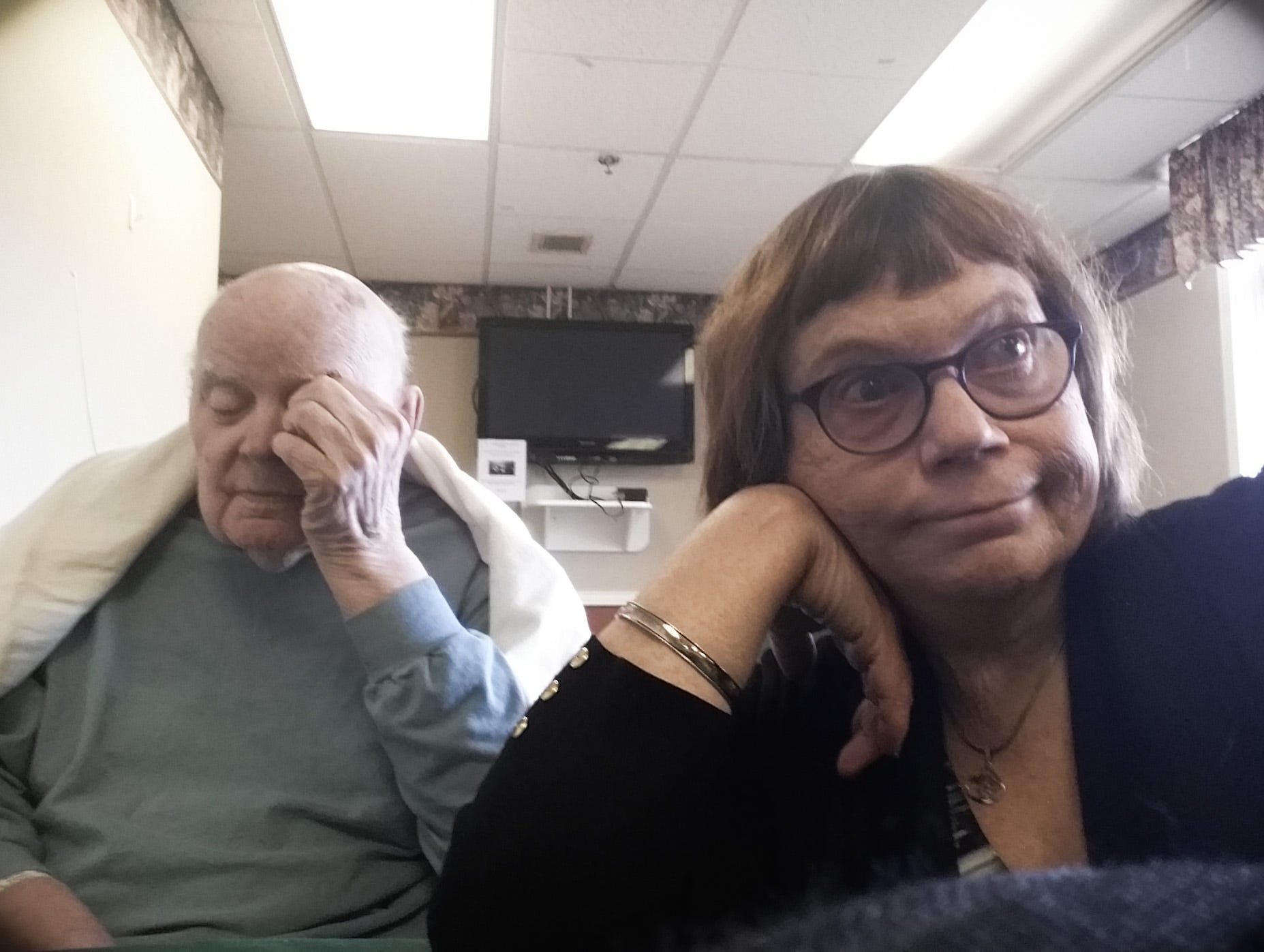
It was during a different visit to the emergency room, however, where I actually learned something about my dad I hadn’t understood before.
On this occasion, I was able to accompany him to the examination rooms in the ER. A clerk was one of the first people to stop in the room – she was there to do the basic paperwork to admit my dad to the hospital. When she came through the closed curtain into the room with her computer on a rolling cart, she looked at me and asked: “And who are you?” As a person with attention deficit disorder, it is well documented that I don’t always have the best impulse control. It took almost all the energy I had not to respond to her with: “Me? I’m his trophy wife.”
I did tell her I was his daughter. I gave her his medical cards, identification card, and photo copies of the power of attorney forms I always had on hand.
“Okay Mr. Wyman, what’s your birthday?”
“Um – his last name is Howard – his first name is Wyman.”
“Oh, I see. “Wyman’ looks like a last name.”
(This was the 4,756th time I’d heard that.) I told her his birthday.
“Okay, Mr. Wy… um Mr. Howard, what’s your middle name?”
Immediately my dad responded (in his authoritative way): “Actually, I don’t have a middle name. It is an old Southern custom to only give someone a first name.”
I had to jump in: “Dad, your middle name is Clark.”
“Why yes, that’s right. My middle name is Clark.” He paused for a moment. “But people call me Pierre.”
If I’d been drinking something, I would have done a traditional comedic spit-take. In all the decades I’d known my dad, I never heard anything like this.
Three years later, after my mother had passed away, I was chatting with my dad while making his dinner. We got to talking about his first job after graduating from college in Detroit and before he became a teacher. He seemed wistful about Detroit. I couldn’t resist asking him: “Dad, you always hated Iowa (and it wasn’t my favorite place either). Did you ever wish you’d stayed in Detroit?”
“Yes … I had my job as a baker’s helper. I was nice. At the end of the day, you could just walk away from it – no preparation, no homework to grade, no administrators to please …”
“And it wasn’t Iowa.”
“That’s right! I think I would have liked staying. The people at the bakery were very nice. They knew how much I loved French and some of them liked to call me ‘Pierre.’ It was a mistake to leave.”
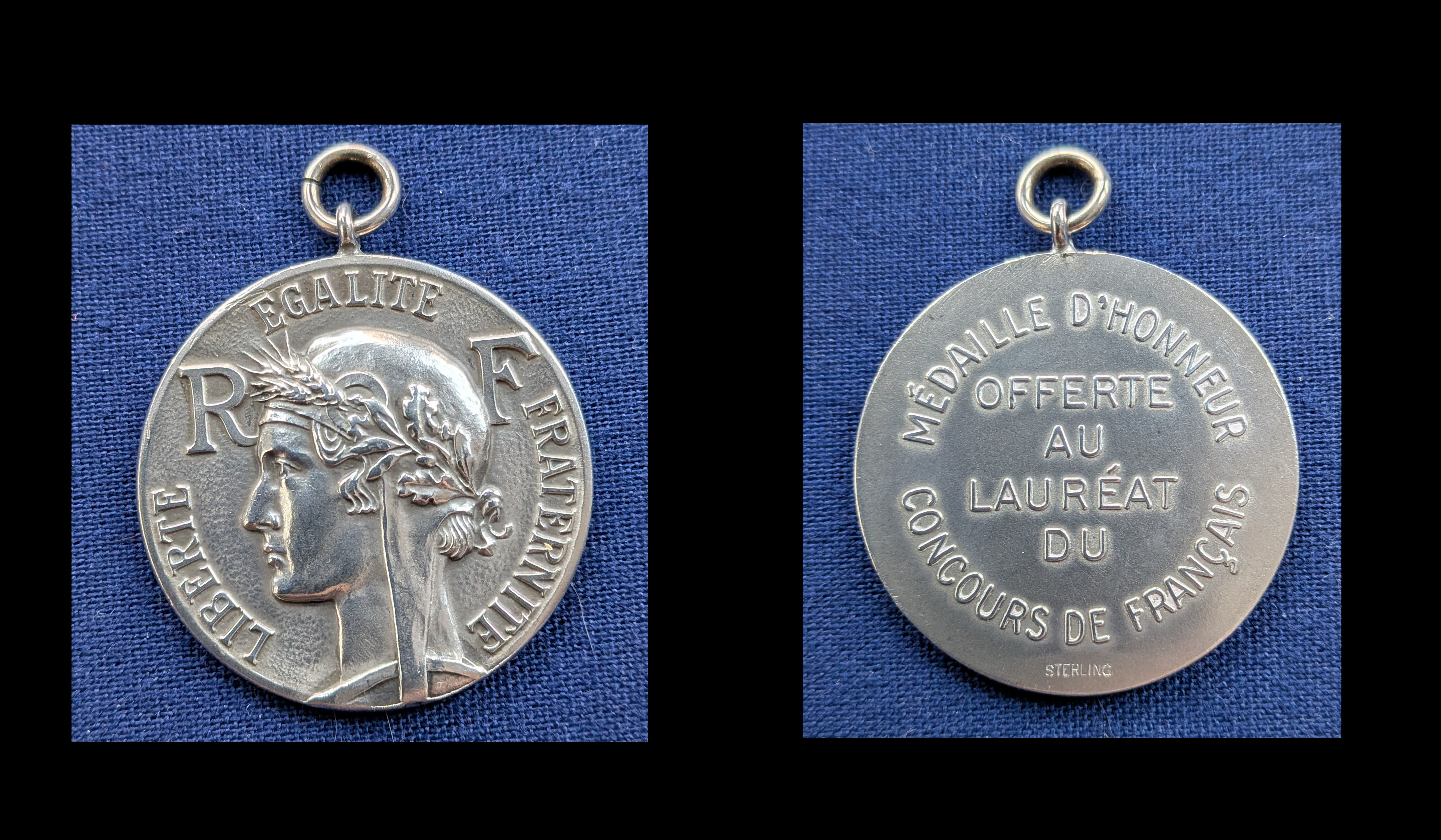
I had known that my dad appreciated French. In fact, he tried teaching me and my older sister the French version of the story of the three bears (“Les Trois Ours”) when we were young. But he gave up, I think it was because our pronunciation was never up to his standards. My mom had told us that my dad had very high standards – he’d gotten a medal in college for French (something I actually found amongst his things long after he’d passed).
When my dad died, I was adamant about conducting his memorial service. I acquired a French Protestant Bible and I copied from it the 23rd Psalm. I read it as part of the service. I hope Pierre didn’t mind my pronunciation too much.
Thank you, Gwen - as always your writing is touching, relevant and with a witty and humorous twist on serious topics. I hear your voice when reading your stories!